

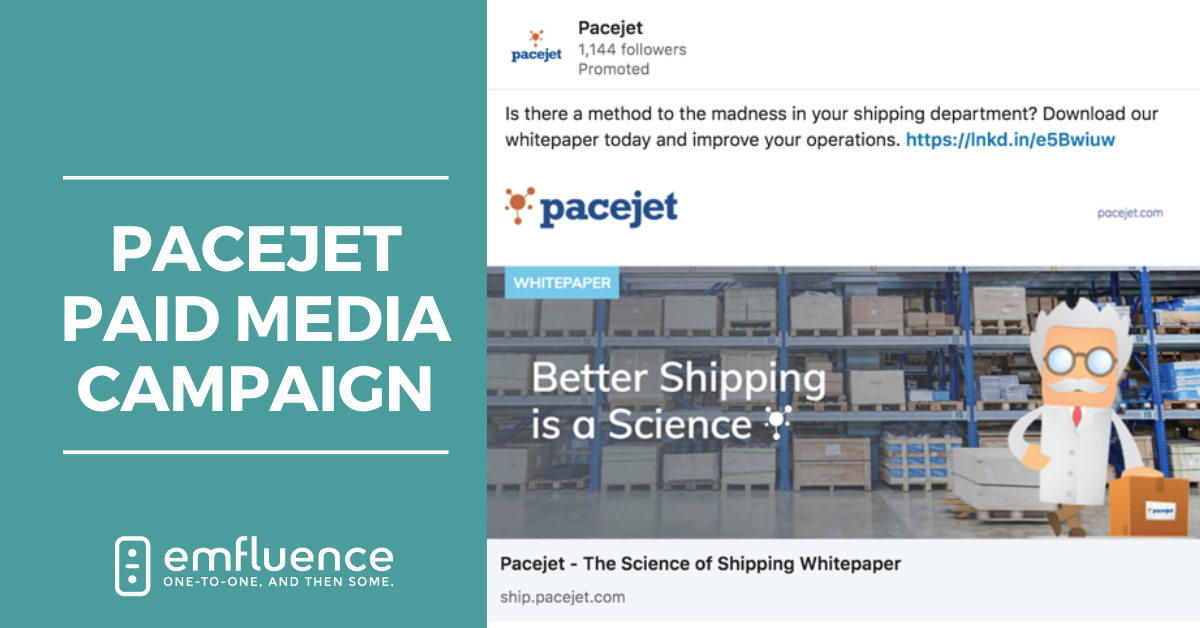

Pay-Per-Click Marketing

Some campaigns need a boost right now.
Pay-Per-Click marketing delivers right-now results.

Unlike Search Engine Optimization, Pay-per-click marketing (PPC) has the ability to generate immediate site traffic, bypassing organic rankings and putting your product or service on top of the search engine results page (SERP).

Managing an effective PPC campaign isn’t as simple as picking a few keywords and setting a daily budget. With hundreds of thousands of dollars in a campaign, “set it and forget it” is a strategy no one ever applauds when the budget is gone and the results are in.

Instead, an effective PPC campaign is run by professionals who know how to craft ads, bid for positions, select appropriate keywords, target geographically, and — most importantly — test, test, test.  After all, the real work of a successful PPC initiative is spent quantifying and qualifying results, then adapting the campaign on a daily or hourly basis to improve those results.

The pay-per-click marketing experts at emfluence have managed millions of dollars in PPC campaigns for clients across a wide variety of industries. We understand that a well run PPC campaign is about perpetually chasing a better ROI. We live on the principle: results are good, but they can always be better.

Three Great Reasons To Engage In Pay-Per-Click Marketing

SPEED

An effective PPC campaign starts with good planning. Once planning is complete, a campaign can be launched within days or in some cases hours. We like to think of it as instant gratification for the marketing addicted.

PPC credentials

AGILITY

PPC provides unmatched ability to adjust to market conditions. Overstocked? Let us know and we’ll focus more of your budget on the items you want to move.

ECONOMICS

In most cases, PPC can generate traffic to your site for a fraction of the cost of any other form of paid advertising. A well structured and managed campaign is always in search of a better return.

How does Pay-Per-Click Work at emfluence?

emfluence's search team is responsible for all PPC campaigns. These are the experts who take a budget and squeeze increasingly better results over a short period of time. Their process works like this:

  1. A budget of three thousand to tens of thousands of dollars is setup and provided to the advertising network, such as Google Adwords or Microsoft adCenter, or a host of other networks.
  2. A competitive analysis phase begins where experts identify what keywords are currently being used. Very often, the obvious keywords (such as CDROM for a company that sells CD-ROMS) are the most expensive per click. So our experts look for what they call "long-tail" options that are much less expensive per click. Maybe in this case they would use "data recording media" or something equally less obvious. Finding long-tail keywords that produce results can take a cost-per-click down exponentially.
  3. Using the keywords identified in step 2, emfluence experts create small text ads that are highly targeted for search results.
  4. A cost per click is decided. How much are we willing to pay for each click?
  5. A budget cap is set. This is a not-to-exceed dollar amount.
  6. And...the waiting game begins.

What's happened here in barely 5 small steps is a very targeted and controlled advertising spend, which is only possible in digital marketing. Users of search engines or visitors to websites with display ads will see this PPC advertisment only if they are interested in this subject. Consider how very different this is than a traditional billboard on a highway, where everyone sees the billboard, even though only 2% of drivers care about the topic.

How do banner ads compare to Pay-Per-Click ads?

The short answer is: They don't. Banner advertising was very popular from 1996-2000, simply because the old way of selling advertising prevailed and pay-per-click hadn't arrived. During that time period, a business owner might have heard from a high traffic website about how many visitors they had. And like traditional advertising sales, this number-of-eyeballs would be the cost justification for the ad placement (along with the usual size, duration, etc).

But very much like the billboard example abovemost of the site visitors were likely to have absolutely no use for a product in a banner advertisement. Compounding this was the fact that the reported number of eyeballs (visitors) came directly from the site selling advertisers the ad space. This created the unpleasant fox-guarding-the-henhouse conundrum; and in the end, probably a few bad apples spoiled the bunch.

This couldn't have been better timing for business owners who needed to market online. Alternatives such as pay-per-click had arrived. Unlike banner ads, pay-per-click ads were not controlled by the website owners, but rather by a presumably arms-lengh 3rd party. A lot of money began to flow between website operators, pay-per-click networks and advertisers, and so today targeting your message has never been more powerfully tracked, measured and improved in such a short time.

What to avoid in Pay-Per-Click

When you evaluate your pay-per-click vendor, and there are a great many, one thing to listen for is how they describe the result of that "click" you pay for. If they insist on calling it a lead, it's probably a good idea dig a little deeper.

A click is not the same as a lead. A lead has a first name, last name, email address...maybe even a phone number or street address, or some combination of those. A click has none of those things.

A click simply takes a visitor (an anonymous visitor) from one location on the internet to your location - to your website, microsite or a landing page. What's important about that click is the visitor was using a search engine to find a keyword that your business cares about. And while not a full blown lead, that click is more likely to turn into a lead if the visitor lands on a controlled, focused message relevant to their original search.

For more information, contact expert@emfluence.com